When legal documents need to be delivered, the process can become more complicated when the person being served appears to be intentionally avoiding the process server. Missed appointments, unanswered doors, vehicles that disappear when a process server arrives, and repeated changes in routine can all make service more difficult.
In Texas, avoiding service does not necessarily make a lawsuit or legal matter go away. However, the person requesting service may need to take additional steps to properly document attempts and, in some circumstances, discuss alternative methods of service with their attorney.
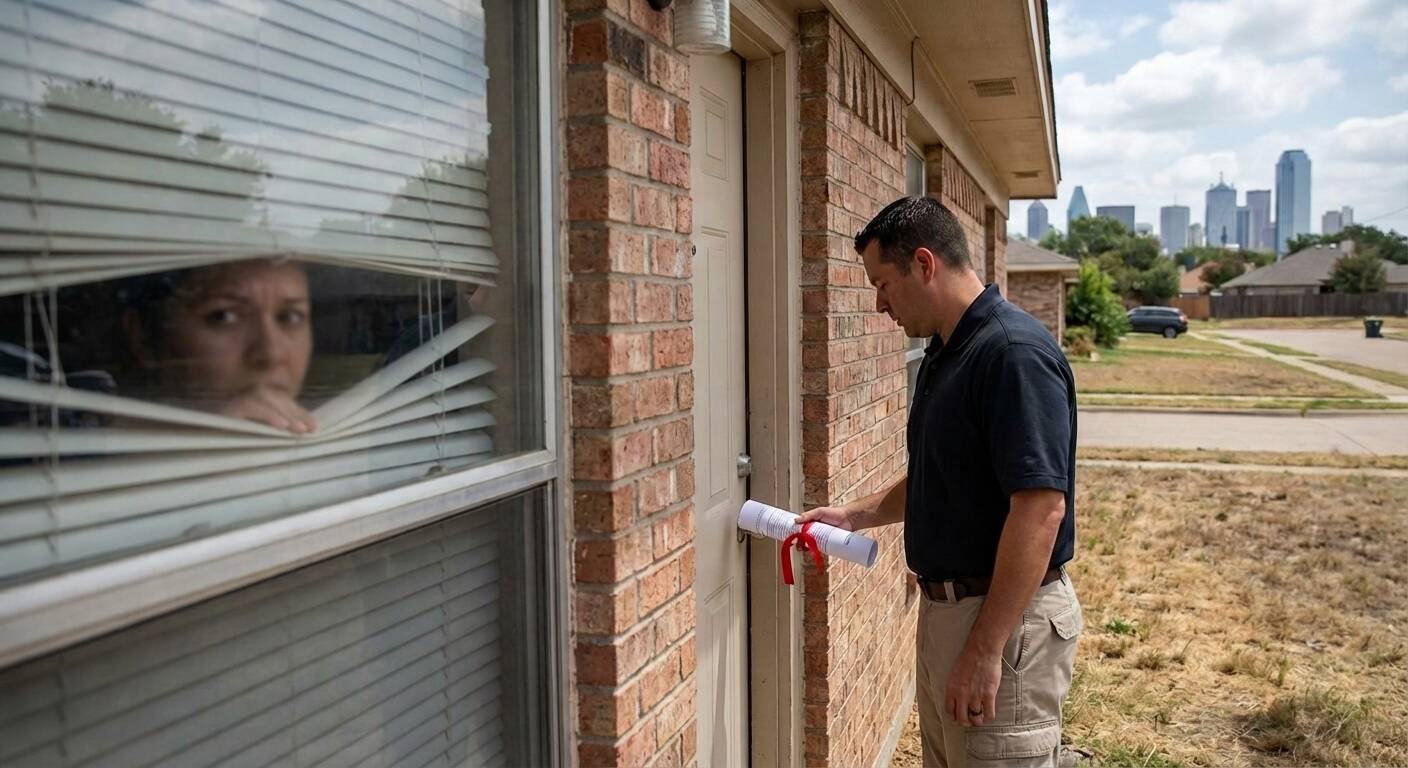
Common Ways People Try to Avoid Being Served
People may attempt to avoid service in several ways. Some of the most common situations include:
- Refusing to answer the door despite indications that someone is home
- Leaving a residence shortly before a process server arrives
- Avoiding known locations where the person regularly stays
- Asking family members or others not to accept documents
- Changing vehicles or routines
- Ignoring calls or messages from a process server
- Repeatedly postponing or canceling agreed meeting times
Avoidance can make locating and serving an individual more challenging, but it does not automatically prevent the legal process from moving forward.
Repeated Attempts May Be Necessary
A process server may need to make multiple attempts at different times and on different days. Someone who is rarely home during normal business hours, for example, may be more likely to be located during an evening or weekend attempt.
The goal is not simply to show up once and leave. A professional process server can use information provided by the client and conduct appropriate attempts to determine when and where service may be possible.
The circumstances of each case are different, so the number and timing of attempts can vary.
Documentation Is an Important Part of the Process
When service is unsuccessful, documenting each attempt can be extremely important.
A process server’s records may include information such as:
- Date and time of each attempt
- Location visited
- Observations at the property
- Whether anyone was contacted
- Vehicles or other identifying information observed
- Attempts to contact the individual
- Details about unsuccessful service attempts
Accurate documentation provides the client and their attorney with a clearer record of what occurred and what efforts were made to complete service.

What If the Person Continues to Avoid Service?
If repeated, reasonable attempts are unsuccessful, the next step may depend on the type of legal matter and the applicable Texas rules.
In some situations, an attorney may determine that it is appropriate to ask the court for permission to use an alternative method of service. Depending on the circumstances and what the court authorizes, this could involve a method other than traditional personal delivery.
It is important to understand that a process server does not simply get to choose an alternative method whenever someone is difficult to locate. Court rules and orders may determine what methods are permitted.

When Should You Speak With an Attorney?
If someone cannot be served after repeated attempts, or there is evidence that the individual is deliberately avoiding service, the client should discuss the situation with their attorney.
An attorney can review the case, determine what options may be available, and advise whether a request for alternative service or another court-approved procedure is appropriate.
A process server can provide documentation of service attempts, but legal advice about what should happen next generally belongs with the client’s attorney.
Why Professional Process Serving Matters
Serving legal documents is more than simply delivering paperwork. Proper service can be an important part of moving a legal matter forward.
When an individual is difficult to locate or appears to be avoiding service, working with an experienced process-serving company can help ensure that attempts are conducted professionally and documented clearly.
At SPS Serve, our process-serving services are designed to help attorneys, law firms, businesses, and individuals with the delivery and documentation of legal documents throughout Texas. Detailed records of attempts can help clients and their legal counsel understand what has been done and determine the appropriate next step.

Avoiding Service Doesn’t Necessarily Stop the Legal Process
Someone who avoids answering the door or meeting a process server may make service more difficult, but avoidance does not necessarily end the underlying legal matter.
If repeated attempts are unsuccessful, thorough documentation can help establish the history of the service attempts. From there, the client may need to consult with counsel about whether another legally permitted method of service should be pursued.
Need someone served in Texas? Professional process serving can help take the guesswork out of locating, attempting service, and documenting the process. Contact SPS Serve to learn more about available process-serving services.