Data centers rely on a wide range of third-party service providers. Electrical contractors, cooling specialists, equipment manufacturers, cleaning crews, maintenance technicians, and other vendors may need access to the facility to keep systems operating reliably.
These relationships are essential, but they introduce a security responsibility that data center owners cannot overlook: ensuring that every third party has appropriate authorization and that access remains controlled throughout the visit.
Why Third-Party Access Requires Careful Management
Unlike ordinary office visitors, data center vendors may need to work near sensitive equipment, power infrastructure, cooling systems, network connections, or restricted operational areas.
A vendor may be authorized to perform a specific repair without needing access to other parts of the building. If access permissions are too broad or are not reviewed, the facility may expose areas unnecessarily.
The goal is to enable legitimate work while maintaining control over who can enter restricted spaces.
Verify Vendor Authorization Before Arrival

A vendor’s presence on-site should be tied to an approved business purpose.
Facility procedures should identify the company, the individuals expected to arrive, the purpose of the visit, the approved work area, and the employee or department responsible for the work.
For unexpected visits, staff should have a clear method for verifying authorization with an appropriate internal contact before allowing entry.
These procedures can reduce confusion when multiple vendors work on-site or when maintenance schedules change.
Limit Access to the Areas Necessary for the Work

Authorization to enter a data center does not automatically mean authorization to enter every room.
Access should reflect the work being performed and the facility’s security requirements. Where appropriate, vendors should be escorted through restricted areas, and temporary access credentials should be limited to the required locations and duration.
Owners should also establish procedures for collecting badges, disabling temporary credentials, and confirming that vendors have departed when their work is complete.
Coordinate Security With Maintenance Activities
Maintenance work can involve equipment deliveries, temporary barriers, open service areas, and changes to normal movement through the facility.
These activities can introduce complications if facility operations and security personnel are not informed in advance.
A coordinated process should identify the work schedule, affected areas, responsible contacts, and any special entry or monitoring requirements. Security personnel should understand what activity has been authorized and how to escalate anything that falls outside the approved scope.
Pay Attention to Emergency and After-Hours Work
Urgent repairs may require technicians to arrive outside normal business hours. These situations can place pressure on staff to grant access quickly.
Data center owners should establish an expedited authorization process for emergencies without eliminating identity verification and accountability.
The procedure should identify who can approve emergency access, how the approval is documented, and how the facility confirms that access is no longer needed afterward.
Maintain Vendor Access Records
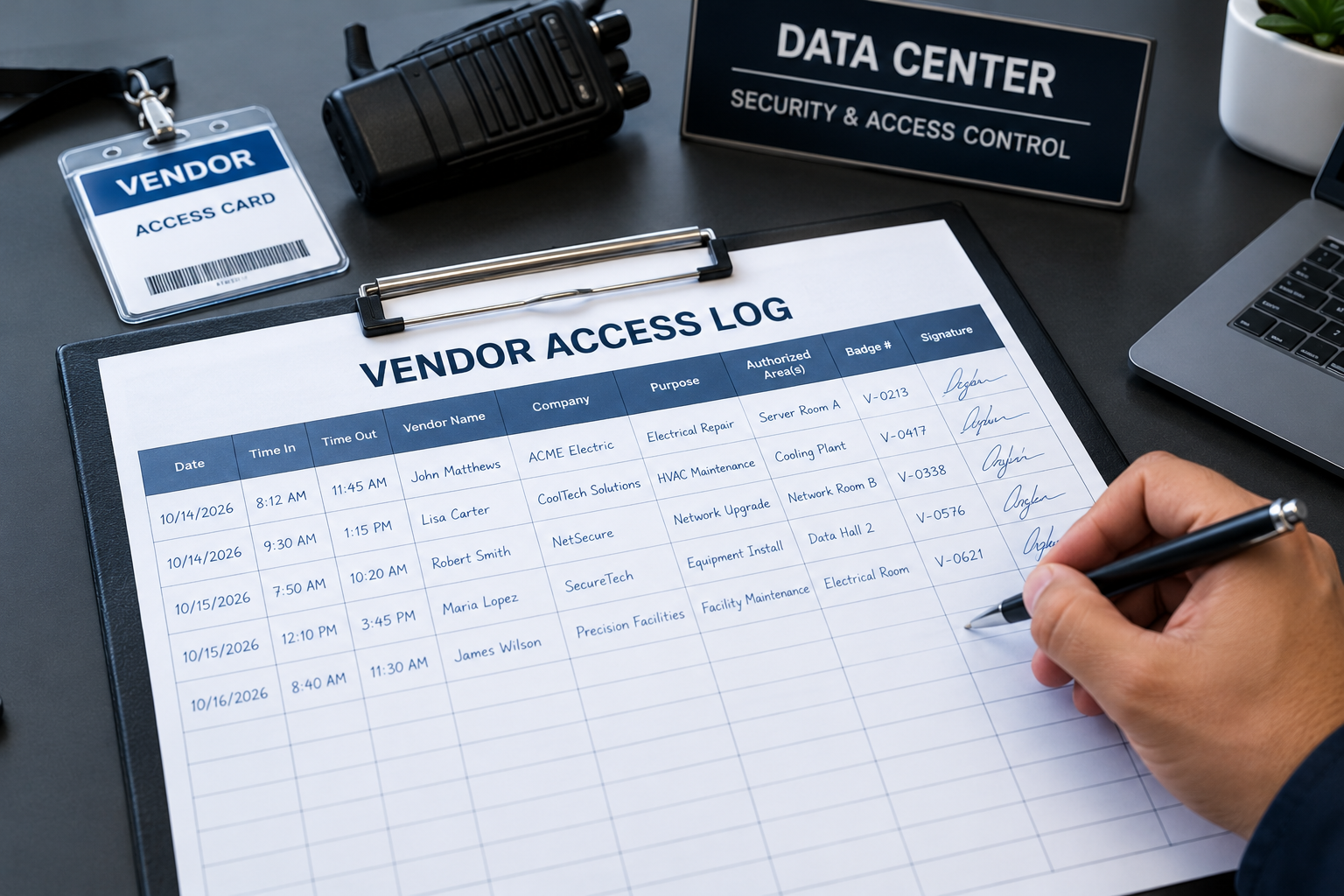
A reliable access record can help management establish who entered the facility, when the visit occurred, and which areas were authorized.
Depending on the facility’s systems and policies, records may include visitor logs, credential activity, escort information, work orders, and departure times.
These records should be managed according to applicable contractual, privacy, and retention requirements.
Periodic reviews can help identify inactive vendor accounts, unnecessary access privileges, and recurring exceptions that deserve attention.
Strengthen Security Without Disrupting Operations
Data center owners must balance physical protection with the need to perform maintenance, upgrades, and repairs on schedule.
A consistent third-party access process helps achieve that balance by establishing clear expectations before work begins.
When vendor authorization, restricted-area access, escort requirements, and departure procedures are coordinated effectively, facilities can reduce uncertainty while supporting operational reliability.
Every vendor visit should have a clear purpose, appropriate authorization, defined access boundaries, and a documented conclusion.